Barcelona: from hard squares to sustainable parks
Urban rewilding projects in Barcelona II
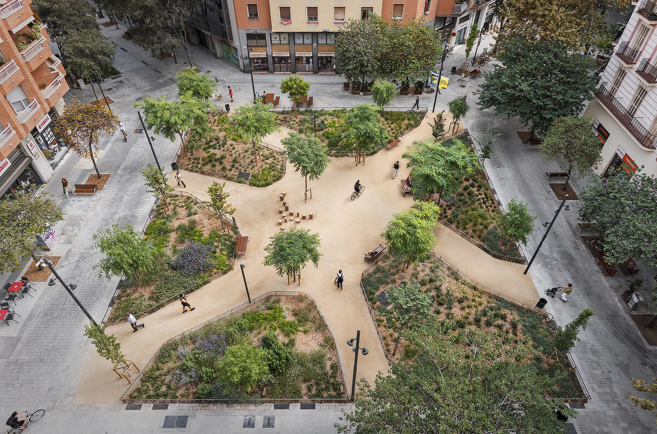
Barcelona is replacing paved spaces such as intersections or interior blocks with new parks, encouraging the natural regeneration of the city
Barcelona's recent transformation reflects a paradigm shift that places nature and pedestrians at the heart of urban design, reclaiming spaces previously dedicated to traffic and prioritizing sustainable solutions. However, this emphasis on the natural component of public spaces wasn't always a priority in the Catalan capital. In the years leading up to the 1992 Olympic Games, for example, the City Council opted to intervene in densely populated and, in some cases, run-down neighborhoods by creating so-called "hard plazas": paved spaces that sought a balance between high-quality architectural design and low maintenance. These plazas prioritized functionality and social cohesion over the presence of vegetation, and in those years they became a hallmark of Barcelona. Despite this trend, alongside the hard plazas, projects more closely connected to nature were undertaken, which could even be considered precursors to recent renaturalization trends. This is the case of the Parc de la Creueta del Coll (1987) by Martorell, Bohigas and Mackay or the Parc del Nus de la Trinitat (1993) by Batlleiroig Arquitectura.
From the web of Guiding Architects Barcelona (Plaça-jardí Rocafort, © Pol Viladoms)